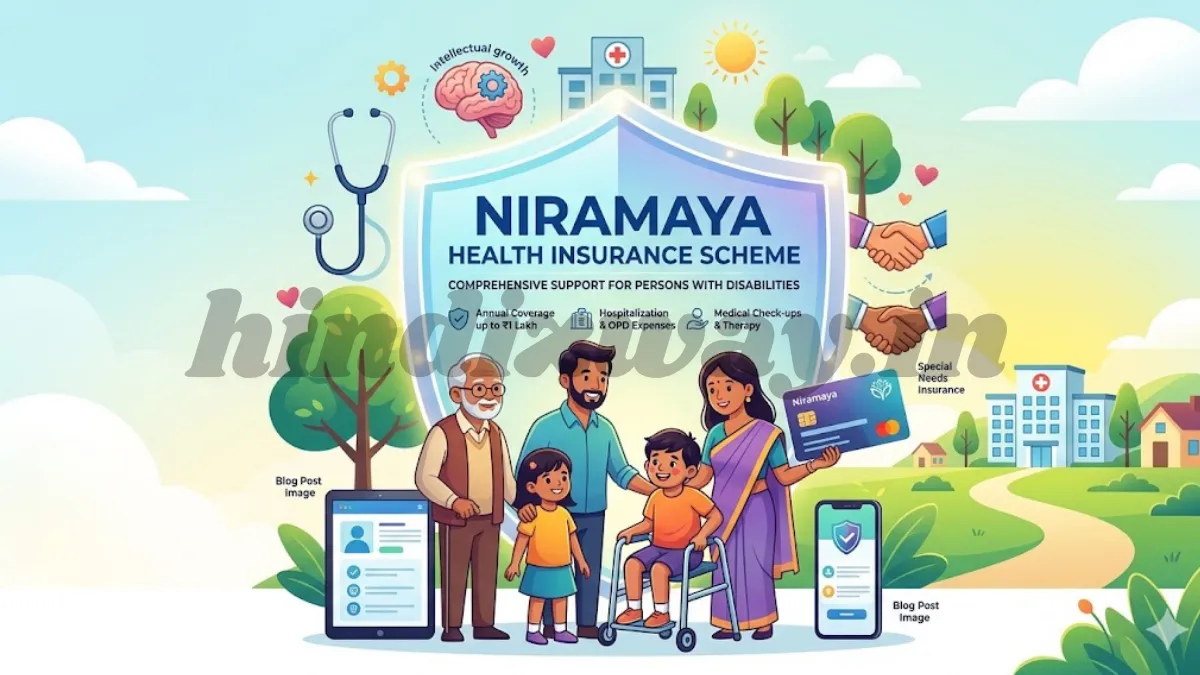
Niramaya Health Insurance Scheme : Learn everything about the Niramaya Health Insurance Scheme — eligibility, coverage, benefits, premium, how to apply, and how it supports persons with disabilities across India under the National Trust Act.
Introduction
Healthcare is a fundamental right, yet for persons with disabilities in India, accessing affordable and comprehensive medical care has historically been an uphill battle. High treatment costs, limited insurance options, and lack of awareness have left millions of disabled individuals and their families financially vulnerable during medical emergencies.
To address this gap, the Government of India introduced the Niramaya Health Insurance Scheme — a landmark initiative specifically designed to provide health coverage to persons with autism, cerebral palsy, mental retardation, and multiple disabilities. Launched under the National Trust for the Welfare of Persons with Autism, Cerebral Palsy, Mental Retardation and Multiple Disabilities, popularly known as the National Trust, this scheme stands as one of the most targeted and compassionate welfare programs in the country’s social security framework.
Niramaya — a Sanskrit word meaning “free from illness” — lives up to its name by ensuring that some of India’s most vulnerable citizens have access to meaningful healthcare support without the burden of prohibitive costs. This article covers every important aspect of the Niramaya Health Insurance Scheme, from what it covers and who qualifies, to how you can apply and what benefits your family can expect.
What Is the Niramaya Health Insurance Scheme?
The Niramaya Health Insurance Scheme is a government-subsidized health insurance program administered by the National Trust under the Ministry of Social Justice and Empowerment, Government of India. It was launched with the primary objective of providing affordable healthcare access to persons suffering from four specific developmental and neurological disabilities:
- Autism Spectrum Disorder (ASD)
- Cerebral Palsy (CP)
- Mental Retardation (Intellectual Disability)
- Multiple Disabilities (a combination of two or more of the above)
The scheme provides an annual health insurance cover of up to ₹1 lakh per beneficiary, with extremely low premium contributions, making it accessible even to families from economically weaker sections of society. The insurance is renewed annually, and beneficiaries can continue availing the coverage as long as they remain eligible. (Niramaya Health Insurance Scheme)
Objectives of the Niramaya Health Insurance Scheme
The National Trust designed the Niramaya scheme with a set of clear, people-centered objectives:
- To reduce the financial burden on families caring for persons with disabilities
- To ensure timely medical intervention and treatment for beneficiaries
- To promote preventive healthcare and regular health check-ups for disabled individuals
- To provide coverage for both outpatient and inpatient treatment needs
- To extend healthcare access to persons with disabilities living in rural and semi-urban areas through a wide network of registered organizations
Who Is Eligible for the Niramaya Health Insurance Scheme?
Primary Eligibility Criteria
The scheme is open to all persons with disabilities falling under the four specified categories, regardless of their age. This means the scheme covers children, adults, and senior citizens alike, as long as they have one of the four qualifying conditions. (Niramaya Health Insurance Scheme)
To be eligible, the applicant must:
- Be diagnosed with autism, cerebral palsy, mental retardation, or multiple disabilities
- Possess a valid disability certificate issued by a competent medical authority
- Be a citizen of India
- Be registered with a Local Level Committee (LLC) or a Registered Organization (RO) under the National Trust
Age — No Bar
One of the most progressive features of the Niramaya scheme is that there is no upper or lower age limit for enrollment. Newborns with disabilities can be enrolled, and elderly persons with lifelong disabilities are equally eligible. This is a significant departure from conventional health insurance policies, which often exclude pre-existing conditions or impose strict age limits.
BPL vs. Non-BPL Beneficiaries
The scheme makes a distinction between Below Poverty Line (BPL) and non-BPL beneficiaries, primarily in terms of the premium amount they are required to pay. Both categories are eligible to enroll, but the financial burden is lighter for BPL families, as detailed in the premium section below.
Premium Structure Under the Niramaya Scheme
One of the most attractive features of the Niramaya Health Insurance Scheme is its highly subsidized premium, which makes it genuinely affordable for economically disadvantaged families.
Premium Rates
| Category | Annual Premium |
|---|---|
| BPL Beneficiaries | ₹250 per year |
| Non-BPL Beneficiaries | ₹500 per year |
For a comprehensive health cover of ₹1 lakh, these premiums are among the most affordable in any government health scheme in India. The National Trust subsidizes the remaining premium amount, making the scheme financially viable while keeping it accessible to all.
Mode of Premium Payment
The premium can be paid through the Registered Organization (RO) or Local Level Committee (LLC) at the time of enrollment or renewal. Payments are typically collected annually, and the policy must be renewed each year to maintain continuous coverage.
Coverage and Benefits Under the Niramaya Health Insurance Scheme
The Niramaya scheme offers a comprehensive package of health benefits that goes beyond simple hospitalization coverage. Here is a detailed breakdown of what the scheme covers:
OPD Treatment
Outpatient Department (OPD) treatment is covered up to a specified limit. This includes:
- Consultations with doctors and specialists
- Diagnostic tests and investigations
- Medicines and prescribed drugs
- Physiotherapy and related rehabilitative services
Hospitalization
The scheme covers expenses related to inpatient hospitalization, including:
- Room rent and boarding charges
- Surgeon, anesthetist, and other specialist fees
- Operation theatre charges
- ICU charges (where applicable)
- Medicines and consumables during hospitalization
Pre and Post Hospitalization Expenses
Expenses incurred before admission (such as diagnostic tests and consultations related to the illness) and after discharge (follow-up visits, medicines) are also covered for a specified period.
Alternative Treatments
Recognizing that many families of persons with disabilities use alternative medical systems, the scheme also extends coverage to treatments under:
- Ayurveda
- Homeopathy
- Unani
- Siddha
This inclusive approach makes the Niramaya scheme unique among government health insurance programs.
Transportation and Escort Charges
Given the mobility challenges faced by many persons with disabilities, the scheme includes coverage for transportation charges to and from the hospital or treatment center, along with escort charges for the caregiver accompanying the beneficiary.
Corrective Surgeries and Therapies
Coverage extends to corrective surgeries that may be needed to manage or improve the condition of the beneficiary — an important benefit for persons with cerebral palsy or multiple disabilities who may require surgical intervention at various stages of their lives.
Non-Medical Expenses
The scheme also covers certain non-medical expenses that arise during the course of treatment and hospitalization, providing a more holistic financial safety net for families.
How to Apply for the Niramaya Health Insurance Scheme
Applying for the Niramaya scheme is a straightforward process, primarily routed through the National Trust’s network of Registered Organizations (ROs) and Local Level Committees (LLCs) spread across India.
Step-by-Step Application Process
Step 1 — Locate a Registered Organization or LLC Find the nearest Registered Organization or Local Level Committee affiliated with the National Trust in your district or city. The National Trust website maintains an updated list of all registered entities.
Step 2 — Obtain the Application Form Collect the Niramaya enrollment form from the RO or LLC. The form can also be downloaded from the official National Trust website.
Step 3 — Fill in the Required Details Complete the application form with accurate details about the beneficiary, including personal information, disability details, and family income status (for BPL classification).
Step 4 — Attach Required Documents Submit the form along with the following documents:
- Recent passport-size photograph of the beneficiary
- Valid disability certificate from a recognized medical authority
- Proof of identity (Aadhaar card, birth certificate, or any government-issued ID)
- Proof of address
- BPL certificate (if applicable), issued by the competent authority
- Income certificate (if applying under non-BPL category)
Step 5 — Pay the Premium Submit the applicable annual premium (₹250 for BPL or ₹500 for non-BPL) along with the completed application.
Step 6 — Receive the Insurance Card Upon successful enrollment, the beneficiary receives a Niramaya Health Insurance Card, which is to be presented at the time of availing treatment at empaneled hospitals or treatment centers.
How to Make a Claim Under the Niramaya Scheme
Cashless Facility
Wherever empaneled network hospitals or treatment centers are available, the scheme provides a cashless treatment facility. The beneficiary simply presents the Niramaya insurance card, and the hospital directly settles the bill with the insurer up to the permissible limit.
Reimbursement Claims
In cases where treatment is availed at a non-network hospital, beneficiaries can file a reimbursement claim by submitting the following to the Registered Organization or directly to the designated insurer:
- Duly filled claim form
- Original bills, receipts, and prescriptions
- Discharge summary (in case of hospitalization)
- Niramaya insurance card copy
- Identity proof of the beneficiary
Claims are typically processed within a stipulated timeframe, and the reimbursement is credited to the beneficiary’s or family’s designated bank account. (Niramaya Health Insurance Scheme)
Role of the National Trust in the Niramaya Scheme
The National Trust for the Welfare of Persons with Autism, Cerebral Palsy, Mental Retardation and Multiple Disabilities is the nodal agency responsible for implementing, monitoring, and expanding the Niramaya scheme across India. Established under the National Trust Act, 1999, the organization works under the Ministry of Social Justice and Empowerment.
The National Trust carries out several key functions in relation to the scheme:
- Empaneling and monitoring Registered Organizations that serve as ground-level enrollment points
- Coordinating with insurance companies to ensure uninterrupted policy coverage
- Maintaining beneficiary databases and processing renewal applications
- Creating awareness among families and caregivers about the scheme’s benefits
- Providing grievance redressal mechanisms for beneficiaries facing claim issues
Niramaya Scheme and Its Impact Across India
Since its launch, the Niramaya Health Insurance Scheme has enrolled hundreds of thousands of beneficiaries across urban, semi-urban, and rural India. The scheme has been particularly impactful in states with high disability prevalence and large BPL populations, where families often have no other means of accessing structured health insurance. (Niramaya Health Insurance Scheme)
The scheme’s emphasis on four specific disability categories — autism, cerebral palsy, intellectual disability, and multiple disabilities — is important because these conditions often require long-term, recurring, and specialized care that is expensive and largely excluded from conventional health insurance products.
By combining low premiums, broad coverage, and a network of registered organizations, the Niramaya scheme has managed to reach communities and individuals who would otherwise be entirely outside the formal healthcare financing system.
Challenges and Limitations of the Niramaya Scheme
While the Niramaya Health Insurance Scheme is a commendable initiative, it is important to also acknowledge some of the challenges associated with its implementation:
- Limited awareness among families, especially in rural areas, means many eligible beneficiaries never enroll
- Network hospital availability can be limited in smaller towns and villages, making cashless treatment harder to access
- The coverage cap of ₹1 lakh may be insufficient for serious surgical procedures or prolonged hospitalizations
- Renewal lapses due to administrative gaps at the RO or LLC level can leave beneficiaries without coverage
- Documentation barriers, particularly the requirement for a disability certificate, can be difficult for families in remote areas to fulfill
Despite these challenges, the scheme remains one of the most targeted and affordable health insurance options for the disabled population in India.
Frequently Asked Questions (FAQs)
Q1. Is the Niramaya scheme only for children with disabilities?
No. The Niramaya Health Insurance Scheme is open to persons with disabilities of all age groups — from newborns to senior citizens. There is no age restriction for enrollment.
Q2. Can a person with a disability other than the four listed categories avail this scheme?
No. The scheme is specifically designed for persons with autism, cerebral palsy, mental retardation (intellectual disability), and multiple disabilities. Persons with other types of disabilities are not covered under this scheme, though they may be eligible for other government schemes.
Q3. What is the maximum insurance cover available under Niramaya?
The scheme provides an annual health insurance cover of up to ₹1 lakh per beneficiary per policy year.
Q4. Is there a waiting period for pre-existing conditions?
Since the scheme is specifically designed for persons who already have the qualifying disability, there is no waiting period for the disability-related conditions. However, specific terms for other pre-existing illnesses may apply as per the policy terms. (Niramaya Health Insurance Scheme)
Q5. Can the Niramaya scheme be combined with other government health schemes like Ayushman Bharat?
Beneficiaries enrolled under Ayushman Bharat (PM-JAY) or other state-level schemes may also be eligible to enroll under Niramaya, as the two schemes cover different aspects. However, beneficiaries should check with the RO or insurer for coordination of benefits and avoid double-claiming.
Q6. Where can I find a Registered Organization near me?
The National Trust website (www.thenationaltrust.gov.in) maintains a searchable directory of all Registered Organizations and Local Level Committees across India. You can search by state or district to find the nearest enrollment point.
Q7. What happens if a claim is rejected?
Beneficiaries can escalate rejected claims to the National Trust’s grievance redressal mechanism or approach the RO for assistance. Proper documentation and timely submission significantly reduce the chances of claim rejection. (Niramaya Health Insurance Scheme)
Conclusion
The Niramaya Health Insurance Scheme represents a meaningful commitment by the Government of India to protect the health and dignity of persons with some of the most challenging disabilities. By offering affordable, comprehensive, and inclusive health coverage with minimal bureaucratic barriers, the scheme acknowledges the unique healthcare needs of individuals with autism, cerebral palsy, intellectual disability, and multiple disabilities — and delivers practical financial support to their families.
For the millions of Indian families caring for a person with a disability, Niramaya is more than just an insurance policy — it is a lifeline that transforms the way they access healthcare and manage the financial pressures of long-term caregiving. (Niramaya Health Insurance Scheme)
If you have a family member who qualifies under the scheme, taking the step to enroll today could make a profound difference in their health outcomes and your family’s financial security. Reach out to the nearest Registered Organization, gather your documents, and give your loved one the health protection they deserve under this vital government initiative.
Also Read Like Niramaya Health Insurance Scheme :
- Capital Gain Account Scheme : The Complete Guide to Saving Tax on Long Term Capital Gains
- How to Calculate Interest Rate Per Month: Complete Formula Guide with Examples for 2026
- How to Delete Facebook Account Permanently in 2026: Complete Step-by-Step Guide to Remove Your Profile Safely
- How to Link LPG ID in 2026: Complete Step-by-Step Guide to Activate Your Gas Subsidy Fast
- How to Book IPL Tickets: 9 Easy and Proven Ways to Secure Your Seat for the Biggest Cricket Matches